

Lighting a home often feels like an insurmountable challenge: where is best to position a lamp in the living room? What type of illumination works best for the bedroom? And once you determine the most functional light fixture, there are countlessly many to choose from. In reality, it is not as difficult as it seems: the first step is defining the furniture layout and, consequently, identifying the areas requiring greater illumination. Establishing the right light points is key to achieving adequate room lighting and defining your home's overall aesthetic style. Remember that light decorates as much as it highlights and enhances materials: placing lights in redundant spots simply to fill empty spaces will not yield good results. Let us proceed step-by-step, exploring the ideal fixtures for each room and discussing the subtle play of light that will make your home unique.
TRANSITION ZONES | DRAMATIC SCENOGRAPHY
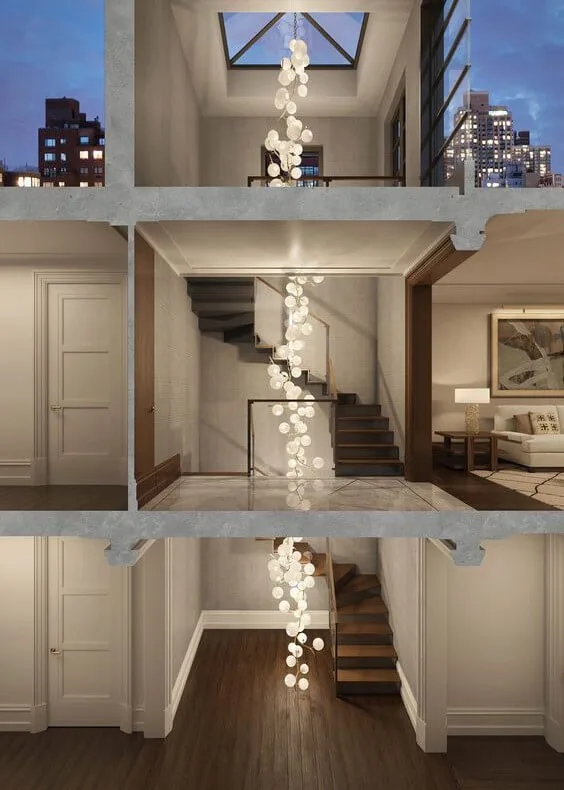
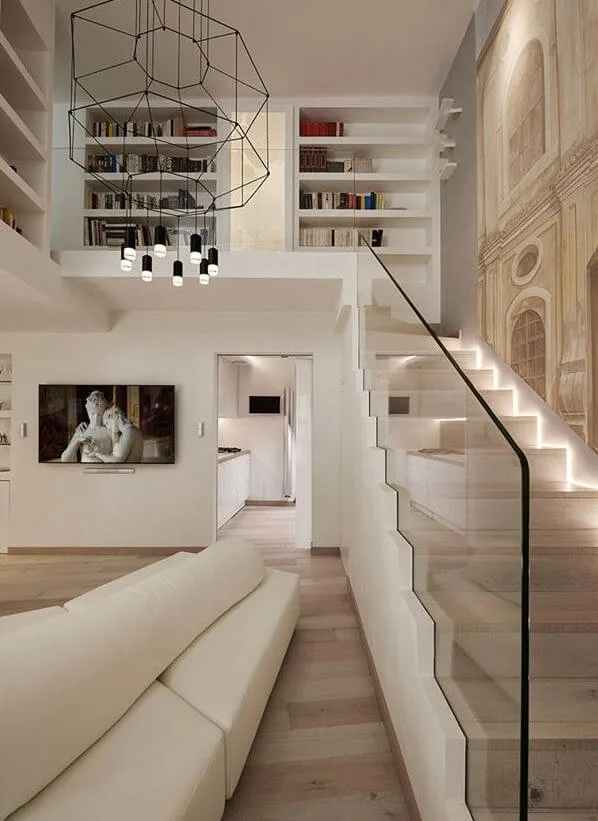
Entrances, staircases, and hallways are unfairly considered mere utility areas unworthy of great design attention. In reality, these spaces offer endless opportunities to illuminate your home and achieve true 'wow' effects. In an entryway, a dropped ceiling framing the space—perhaps with a recessed spotlight—creates a welcoming ambiance for arriving guests. Along staircases, as well as along any clean architectural line in the house, flush-to-floor LED strips can be installed to emphasize profiles while serving as functional step markers.
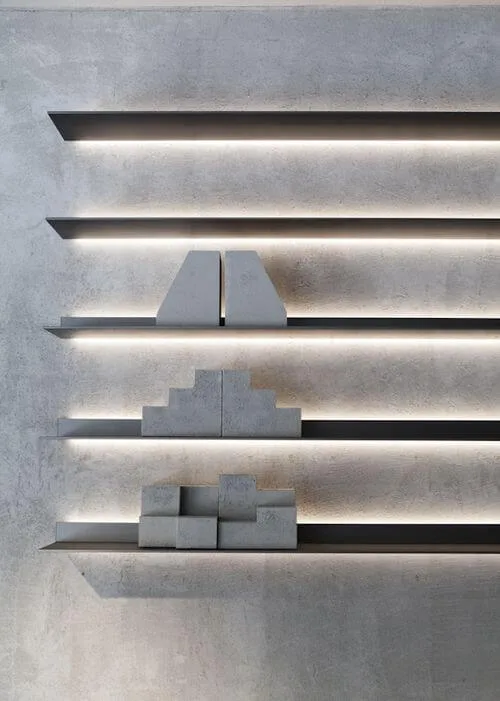
To complete this area, we can introduce vertically expressive pendant lamps—like the one pictured below on the left—creating a captivating dramatic centerpiece visible from the stairs and both connected floors. A sleek, modern touch ideally suited for transit areas is illuminating the home with back-lit niches or floating shelves for books and decor, such as the back-lit Hang shelf by Desalto featured on the right.
To complete this area, we can introduce vertically expressive pendant lamps—like the one pictured below on the left—creating a captivating dramatic centerpiece visible from the stairs and both connected floors. A sleek, modern touch ideally suited for transit areas is illuminating the home with back-lit niches or floating shelves for books and decor, such as the back-lit Hang shelf by Desalto featured on the right.
LIVING AREAS | THE WELCOMING POWER OF LIGHT
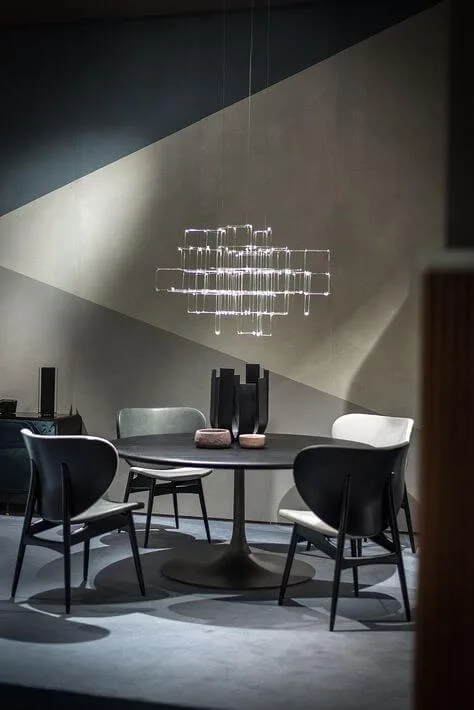
The kitchen is a room where practicality is paramount, including lighting: illuminating the countertop from beneath upper cabinets is essential to guarantee maximum working comfort, meaning decorative drama takes a slight backseat to functionality. For the dining area, the light fixture positioned above the table becomes a pivotal design element. Suspended pendants of all styles can be chosen—provided they harmonize with the surrounding decor—such as Baxter's Q1 pendant (pictured below left), stunning over a round dining table, or Baxter's Blade pendant, offering a sleek, linear silhouette paired with a rectangular table.
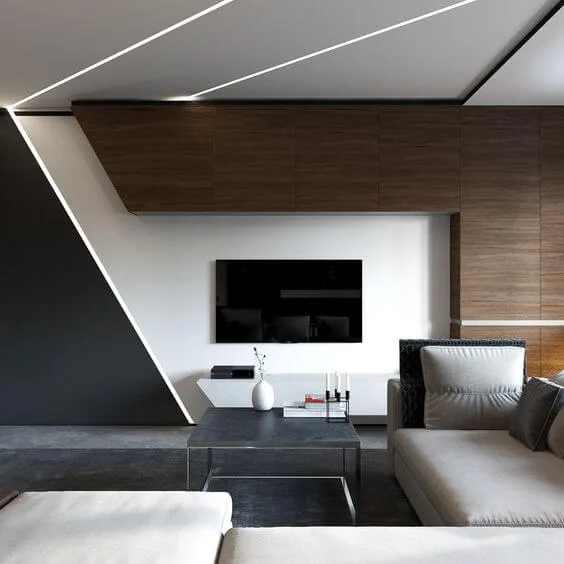
The living room is where we unwind at the end of the day or entertain guests: lighting here should foster a relaxing atmosphere. Recessed linear light channels (preferably dimmable) are currently on-trend, tracing geometric forms or following room perimeters to redefine architectural contours. They create a striking visual impact, offering full ambient illumination or, when dimmed, a soft, intimate glow. Regardless of placement, our key recommendation when using LED strips is to opt for a color temperature below 3000 K—never colder—to avoid harsh neon-like atmospheres. Beside sofas and armchairs, dedicated floor or pendant reading lights are ideal to enhance comfort.
The living room is where we unwind at the end of the day or entertain guests: lighting here should foster a relaxing atmosphere. Recessed linear light channels (preferably dimmable) are currently on-trend, tracing geometric forms or following room perimeters to redefine architectural contours. They create a striking visual impact, offering full ambient illumination or, when dimmed, a soft, intimate glow. Regardless of placement, our key recommendation when using LED strips is to opt for a color temperature below 3000 K—never colder—to avoid harsh neon-like atmospheres. Beside sofas and armchairs, dedicated floor or pendant reading lights are ideal to enhance comfort.
WANT TO CHOOSE THE PERFECT LIGHTING? CREATE THE RIGHT DESIGN FOR YOU
NIGHT ZONES | SOFT LIGHTING AND AMBIENCE
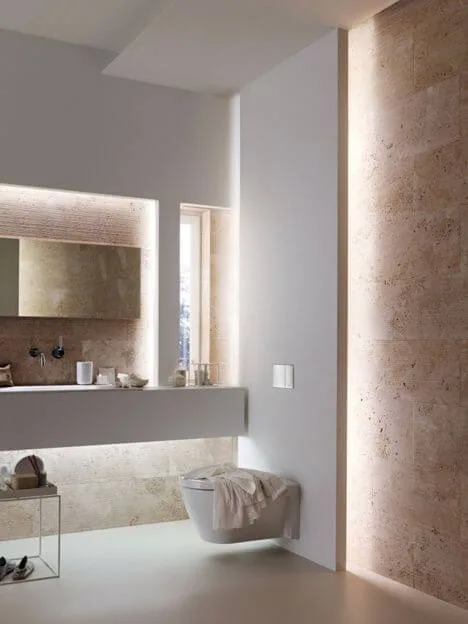
In recent years, the bathroom has evolved into a dedicated sanctuary for wellness: lighting design reflects this shift through back-lit architectural volumes and ambient illumination. For instance, wall-grazing light can soft-focus a feature wall, as shown in the image below left. Conversely, mirrors and vanity surfaces always call for precision technical task lighting for functionality. Beside a freestanding bathtub, a dramatic low-hanging pendant light can blend wellness aesthetics with visual impact.
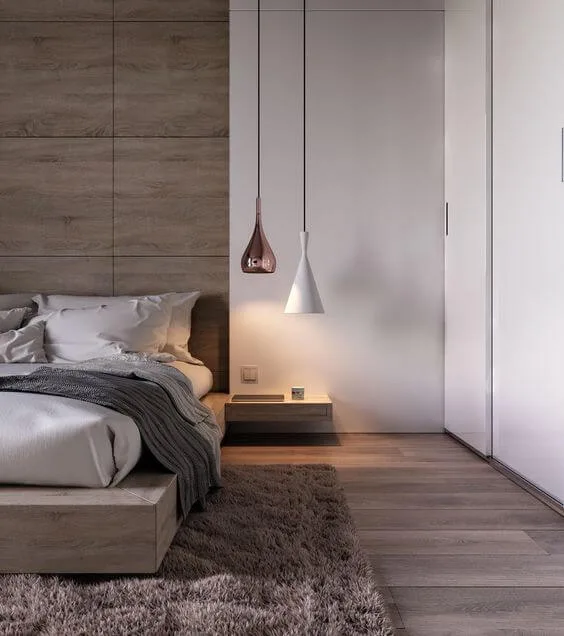
The bedroom is the home's intimate heart, the ultimate private sanctuary: high-intensity lighting isn't necessary; instead, it is best to incorporate multiple localized light points to activate as needed. Bedside lamps—whether table-mounted or suspended pendants—are essential elements. Choosing contrasting materials across bedside fixtures introduces a sophisticated, curated feel. With this essential guide, selecting your home's lighting design should feel intuitive: focus on light functionality, choosing fixtures thoughtfully rather than purely for decorative novelty. Prioritize luminaires that foster the right atmosphere in each room, enhancing warmth and mirroring your home's overall design narrative: the right lighting will make all the difference.
The bedroom is the home's intimate heart, the ultimate private sanctuary: high-intensity lighting isn't necessary; instead, it is best to incorporate multiple localized light points to activate as needed. Bedside lamps—whether table-mounted or suspended pendants—are essential elements. Choosing contrasting materials across bedside fixtures introduces a sophisticated, curated feel. With this essential guide, selecting your home's lighting design should feel intuitive: focus on light functionality, choosing fixtures thoughtfully rather than purely for decorative novelty. Prioritize luminaires that foster the right atmosphere in each room, enhancing warmth and mirroring your home's overall design narrative: the right lighting will make all the difference.
WANT TO CREATE HARMONY BETWEEN LIGHTING AND FURNISHINGS? WE ARE THE EXPERTS YOU NEED
Request Information
ANCHE TU VUOI CREARE ARMONIA TRA LUCI E ARREDO?SIAMO GLI ESPERTI CHE CERCHI
Richiedi informazioni