

Selecting a kitchen worktop—commonly referred to as the countertop or "top"—is one of the most critical decisions in interior design, balancing two essential pillars: aesthetics and functionality. It is vital to find a design that harmonizes with the overall interior architecture while ensuring everyday practicality, as a high-performance worktop must endure your specific culinary habits: someone preparing ingredients directly on the surface will require different qualities than someone who always relies on a cutting board. Different materials perform uniquely in terms of strength, durability, and resilience; understanding their technical nuances is key to making an informed choice.
Given that the single "perfect" worktop—one that fulfills every possible demand without compromise—does not exist, the starting point is to analyze how you live in your kitchen. Highlighting your daily habits allows you to select the material best aligned with your lifestyle. In recent years, the market has evolved dramatically: traditional laminate has been joined by innovative, high-tech surfaces whose brand names often obscure their true composition. Below, we break down the eight primary materials used for luxury and contemporary kitchen worktops.
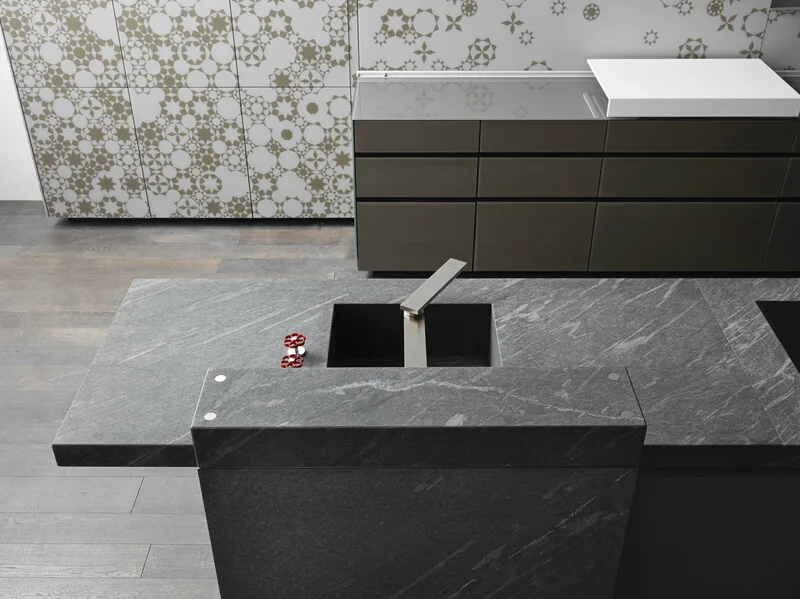
Laminate Kitchen Worktops
Laminate is one of the most widespread and recognized materials for kitchen counters: it consists of a thin sheet of melamine and phenolic resin (HPL) applied over a particleboard or plywood substrate. Thanks to a wide variety of finishes—some remarkably replicating natural wood grain or stone textures—and a broad spectrum of colors, it offers exceptional versatility. Its primary advantages include budget-friendliness, resistance to everyday kitchen stains like tomato sauce, coffee, lemon juice, or wine, and effortless hygiene and maintenance, easily releasing even stubborn grease spots. Its main drawback is low heat resistance: hot pots cannot be placed directly onto laminate without a trivet. It is also more susceptible to impacts, scratches, and blade chipping. If opting for laminate, choosing an embossed or textured finish rather than a glossy or smooth one provides noticeably superior durability.
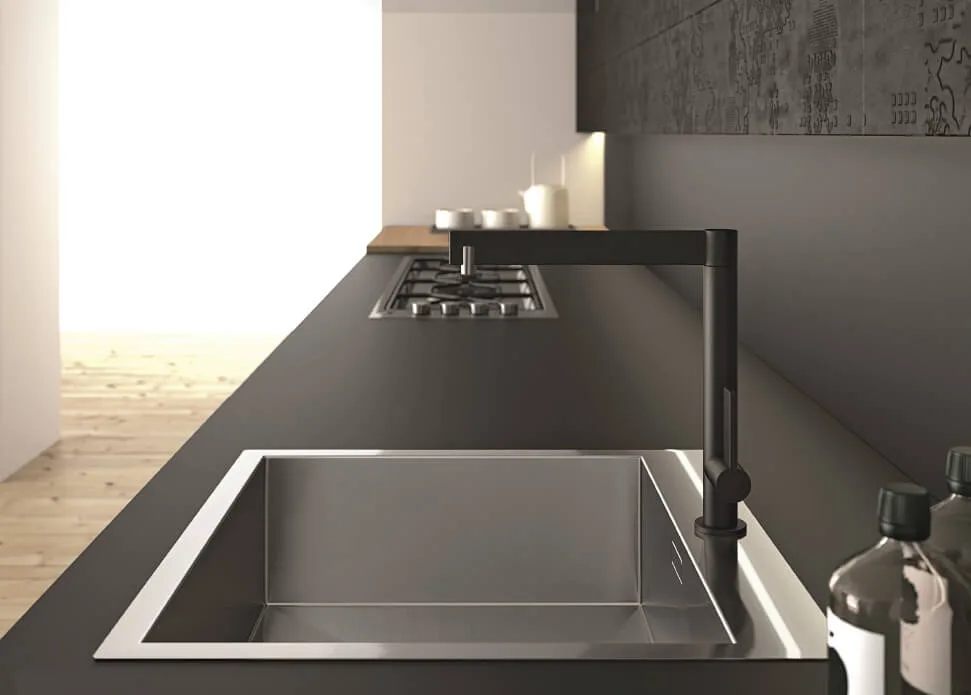
Granite Kitchen Worktops
Among the most noble natural materials for a kitchen countertop is granite—a broad term encompassing igneous natural stones celebrated for their distinct veining, mineral inclusions, and unique color variations. The true luxury of a granite worktop lies in the individuality of each slab, imparting an authentic, bespoke character to your kitchen architecture. Choosing natural stone allows you to prepare food, knead dough, and even place hot cookware directly on the surface thanks to its exceptional heat and scratch resistance. Granite naturally withstands acids like vinegar and lemon, but being inherently porous, it can absorb spills like coffee, sauce, or cooking oil if left unattended. Typically, granite worktops receive specialized protective treatments—traditional or nanotech sealers—that minimize absorbency without fully sealing the pores. We recommend re-treating the stone annually to ensure lasting beauty and performance.
Marble Kitchen Worktops
Another revered natural stone steeped in culinary tradition is marble. Unlike granite, marble is a metamorphic limestone, making it relatively softer and easier to shape. Here too, subtle veining and chromatic gradations turn each worktop into a one-of-a-kind statement. Why choose marble? Master pasta makers have always preferred marble—specifically Carrara—because its naturally cool surface prevents dough from sticking. If handcrafting fresh pasta or pastry is your passion, marble is an unmatched choice, provided you embrace its authentic nature: it is sensitive to acidic foods like lemon, tomato, and coffee, and should be cherished for the timeless, lived-in patina that only natural stone acquires over years of use.
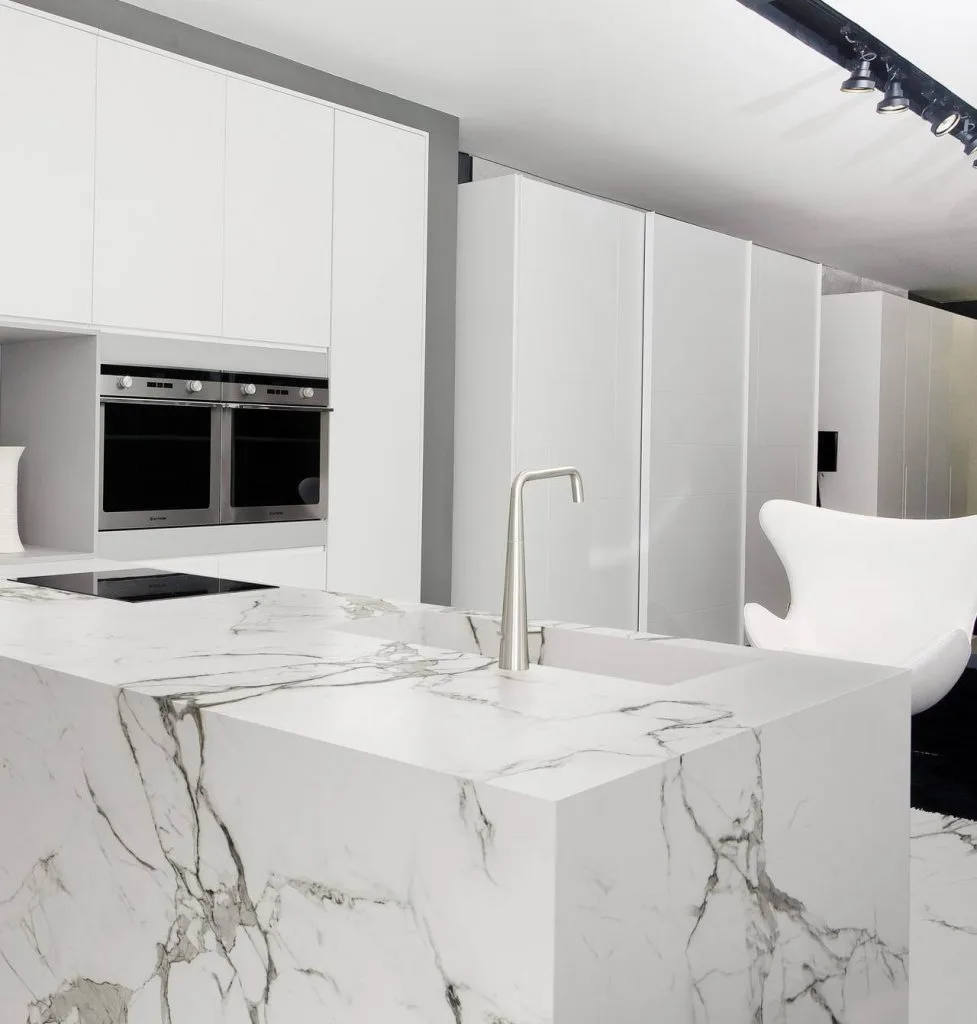
Glass Kitchen Worktops
Glass represents one of the most striking and modern choices for kitchen countertops. While often associated with fragility, tempered architectural glass tells a completely different story. Crafted by fusing natural minerals such as silica and alumina, it possesses an intrinsic elasticity that, once tempered through controlled thermal heating, renders it exceptionally impact-resistant and safe—shattering into small, blunt granules rather than sharp shards in the rare event of breakage. At Valcucine showrooms, this resilience is demonstrated by dropping a half-kilogram steel ball from two meters directly onto the glass. (As with many materials, the exposed front edge remains the most vulnerable point and should be treated with care.) Alongside its durability, glass offers uncompromising hygiene, effortless cleaning, and a sophisticated aesthetic: available in countless hues with either high-gloss finishes for an ultra-sleek, technical look, or frosted matte textures for a softer, tactile elegance.
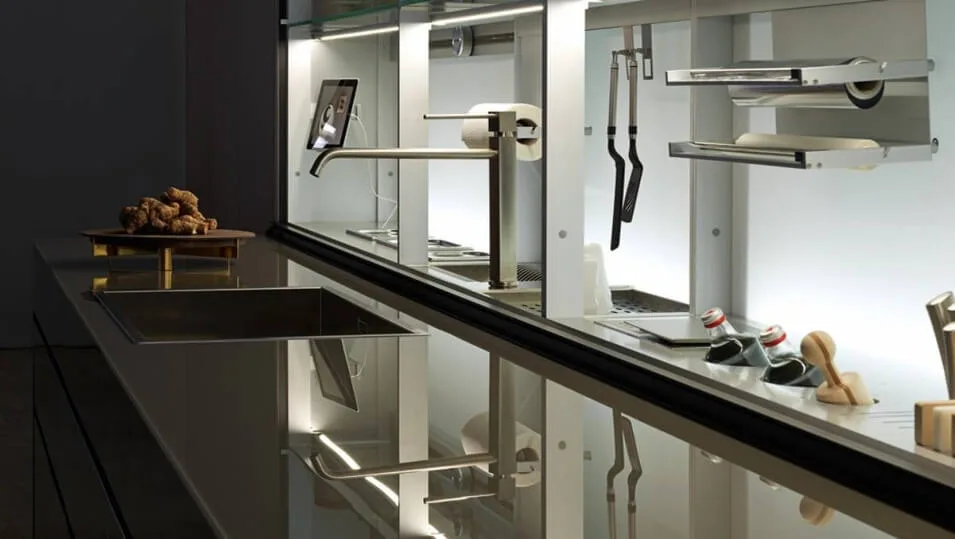
Quartz Composite Worktops
Among engineered surfaces, quartz composites are among the most renowned, offered under brands like Stone Italiana, Okite, Silestone, and Caesarstone. These surfaces combine natural quartz with varying ratios of polymer resin. Formulations with low resin content—exceeding 90% mineral quartz—are considered premier in terms of both refinement and durability. They offer hardness and abrasion resistance comparable to granite while remaining completely non-porous and stain-proof. Their sole vulnerability is thermal shock, requiring trivets under hot cookware. Engineered quartz is ideal when you desire the durability and presence of natural stone paired with guaranteed chromatic consistency across slabs. Higher-resin options provide thermoformable flexibility, facilitating seamlessly integrated sinks and simplified scratch restoration, making them effortless to live with. With an extensive range of shades and textures, quartz blends seamlessly into both modern and classic schemes.
Corian® Worktops
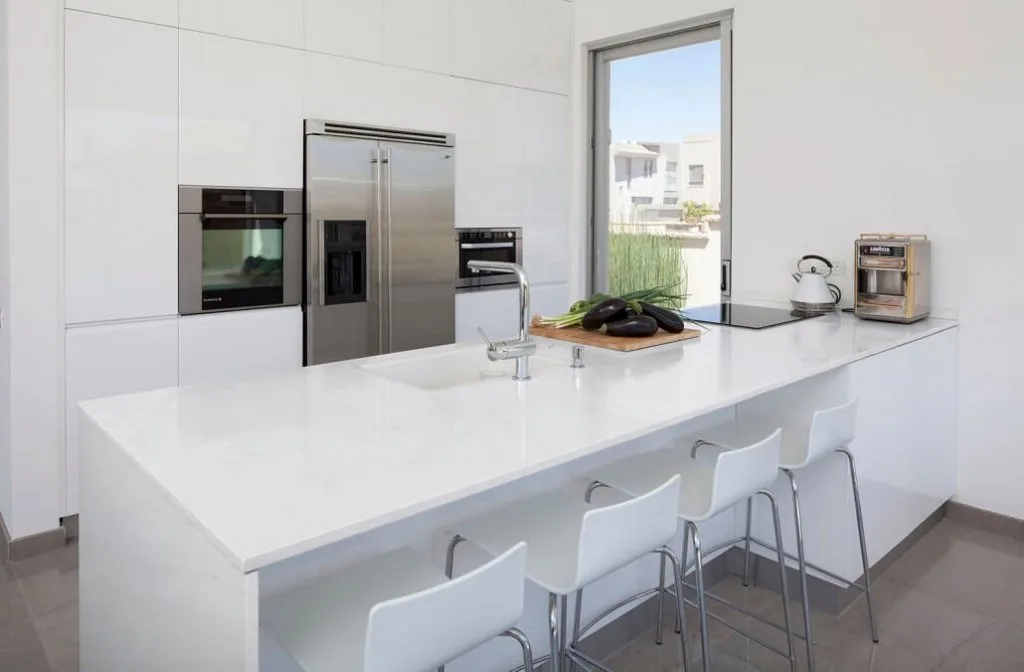
Corian® is an advanced solid-surface material composed of finely milled natural minerals, pure acrylic polymers, and pigments, resulting in an entirely non-porous, homogeneous surface. Conceived to offer seamless versatility, it can be thermoformed and fabricated into fluid geometries and monolithic shapes unattainable with natural stone. If your architectural vision favors curvilinear profiles, integrated sinks, and invisible joints, Corian® is unrivaled. While white remains its iconic signature, a broad palette of colors is available. Because it is a softer material, direct cutting and exposure to hot cookware must be avoided—cutting boards and trivets are essential. However, should surface scratches or scuffs occur, Corian® can be effortlessly restored and renewed in situ by a specialist.
Ceramic and Sintered Stone Worktops
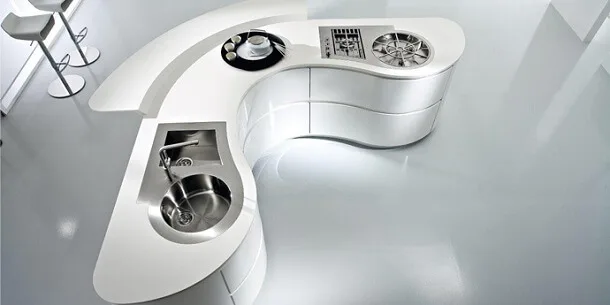
Long celebrated in architecture for tiling and wall claddings, advanced ceramics and sintered stones (such as Laminam, Lapitec, and Kerlite) have transformed modern kitchen design. From a functional perspective, porcelain stoneware is one of the highest-performing surfaces available: entirely scratch-proof, stain-proof, chemically inert, hygienic, and extraordinarily heat-resistant, easily withstanding cookware straight off the flame. The only potential vulnerability lies in edge impact resistance when sharp, heavy blows occur, caused by the low elasticity of clay fired at extreme temperatures. To counter this, premier manufacturers reinforce the slabs with carbon-fiber or specialized backing mesh to absorb kinetic energy and prevent fractures.
Stainless Steel Kitchen Worktops
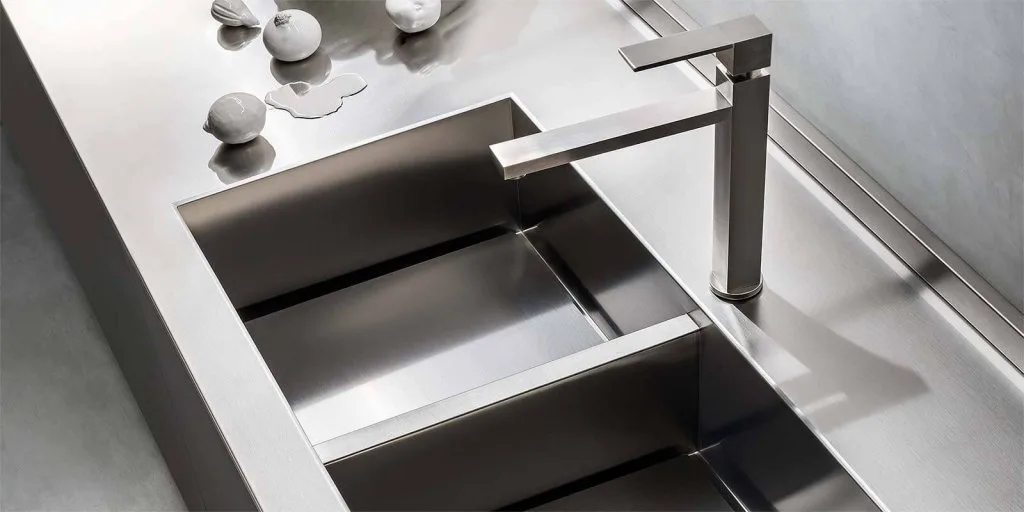
A perennial favorite of professional chefs, stainless steel has firmly established its place in refined residential architecture. It is virtually indestructible, non-porous, completely hygienic, and naturally luminous. One of its standout architectural features is the ability to seamlessly weld cooktops and sink basins directly into the counter, creating a sculptural, continuous aesthetic. Choosing stainless steel requires embracing its authentic lifecycle: minor hairline scratches will naturally appear with everyday use. Over time, these micro-scratches blend into an even, satiny patina that enriches the steel's professional character.
Designing the Ideal Solution
In summary, identifying the best kitchen worktop depends on your specific lifestyle, culinary habits, and aesthetic sensibilities. Begin by assessing the entire architectural setting, pairing materials that complement your cabinetry, routine, and budget. Achieving a balanced interior means marrying beauty with functionality. A leading trend in contemporary design is pairing ultra-thin, high-tech surfaces with substantial natural stone elements, creating a dynamic dialogue between textures and heights that enhances both kitchen ergonomics and visual sophistication.
Request Information